

Successfully taking possession of a commercial property is sometimes only the beginning.
Following the initial entry and securing of the site, Operation Stronghold moved into its longest phase: maintaining control of the premises while allowing the former tenant to recover belongings, responding to developing security risks and gradually reducing resources as those risks decreased.
The detailed planning undertaken before the operation now became particularly important.
Maintaining Control of the Site
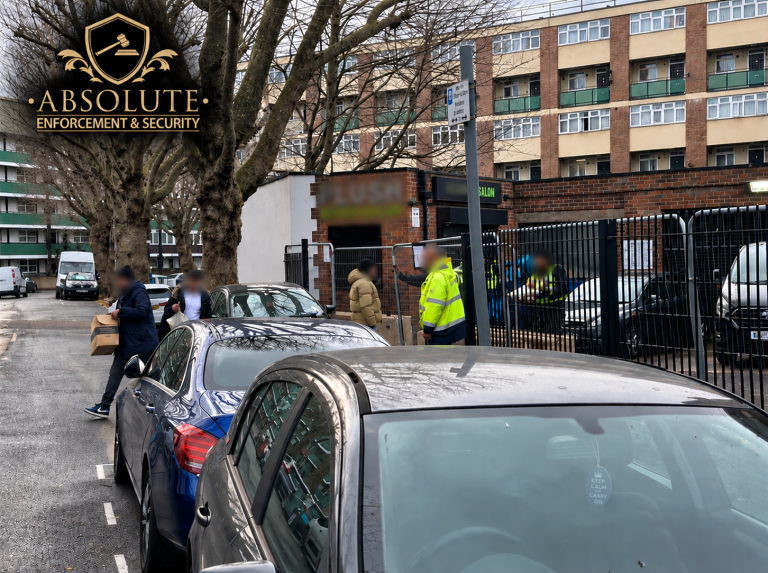
During the days following the forfeiture, the former tenant continued to attend outside the site and meet with numerous individuals from the surrounding community.
Various vehicles and individuals also attended or passed the premises. While their intentions could not always be established, the pattern of activity meant the security team remained alert to the possibility of an attempted breach.
Rather than assuming the risk had ended once possession had been recovered, the Enforcement Team Leader continued carrying out dynamic risk assessments throughout the operation.
Security personnel and dog units therefore remained deployed while the situation developed.
Assisting With the Removal of Goods
An important part of the operation involved managing goods and equipment remaining within the premises.
The former tenant was given opportunities to arrange the collection of items in which an interest was claimed. Access was controlled so that the security of the site was not compromised.
One significant item was a mobile food unit which required specialist transport and storage.
To help facilitate its removal, Absolute Enforcement contacted suitable HIAB transport and storage providers and passed the details to the former tenant. We also identified a potential self-storage provider and supplied measurements of the unit to assist with arrangements.
This demonstrated an important aspect of the operation: maintaining firm control of the premises while still taking a practical and proportionate approach to the removal of goods.
Threats and Increasing Security Concerns
As the operation continued, the atmosphere outside the site periodically became more confrontational.
On one occasion, an individual made comments suggesting that the security perimeter could be breached.
On another occasion, an individual wearing a face covering became particularly volatile and made specific threats of violence towards personnel and the security dogs.
The incident was reported to the Metropolitan Police and an incident reference was obtained.
The police subsequently contacted our team regarding the matter. Operational availability ultimately meant officers were not able to attend at that stage, reinforcing why the operation could not rely upon immediate police attendance to maintain control of what remained a civil enforcement matter.
The threats were incorporated into the continuing dynamic risk assessment and security remained in place.
Information Concerning Potential Unlawful Activity
During the operation, individuals attended the premises claiming they had come to collect a package connected with one of the businesses.
During discussions with our team, information was provided directly by those individuals which raised concerns about potential unlawful activity connected with the movement of people and goods.
The information was considered sufficiently concerning to be passed to the Metropolitan Police.
Our role was not to determine whether a criminal offence had taken place. Where information or activity potentially fell outside the scope of the civil enforcement operation, the appropriate course was to record what had occurred and pass relevant information to the police.
This also reinforced some of the concerns identified during the intelligence-gathering phase before Operation Stronghold began.
Controlled Collection of the Remaining Assets
Over the following days, arrangements were made for the former tenant and associated parties to recover belongings from the premises.
Vehicles attended to collect substantial quantities of goods, with the security team bringing items to the controlled collection point rather than allowing unrestricted access throughout the site.
Where specialist removal was necessary, access was considered individually.
For example, a qualified electrician was permitted controlled access to remove electrical water pumps and lighting equipment. Identification and evidence of relevant qualifications were checked, and the individual remained supervised while inside the secured area.
A glass door claimed to have significant value was also removed under controlled arrangements.
Throughout these collections, the team remained conscious that access arrangements must not undermine the security of the wider site.
Confirmation Regarding Remaining Goods
Once the majority of belongings had been collected, the former tenant confirmed on video that there was no further interest in the remaining goods, other than the mobile food unit that was still awaiting specialist removal.
The HIAB contractor subsequently attended and successfully removed the food unit.
Following its removal, a further recorded conversation took place in which the former tenant confirmed that the assets of interest had been removed and that no further interest was claimed in the site.
Maintaining clear records throughout this process provided an important audit trail of what had occurred.
Further Concerns Identified at the Property
During a subsequent inspection, contractors identified concerns regarding the site’s electrical supply.
The matter appeared sufficiently unusual to raise concerns about possible unauthorised use or interference with the electricity supply. The information was reported to the police and an incident reference was obtained.
Again, Absolute Enforcement did not attempt to determine criminal liability. The relevant information was recorded and passed to the appropriate authority.
Community Reaction and Social Media Monitoring
The forfeiture attracted increasing attention within the surrounding community.
Leaflets were distributed outside the premises, campaign material was attached to the perimeter fencing and individuals continued attending the site.
Our team also monitored publicly available social media information relating to the premises. This provided useful operational intelligence regarding community reaction and, importantly, indications of potential organised activity at the site.
The information was incorporated into the ongoing dynamic risk assessment.
An Organised Protest
The intelligence proved useful when an organised protest subsequently took place outside the premises.
Approximately 30 to 40 people attended during the afternoon.
The Metropolitan Police had been informed and an incident reference obtained. Police resources were already operating in the wider area and a police vehicle was positioned near the site during the protest.
By this stage, however, the enforcement and security operation had already been structured around the possibility of significant third-party attendance.
The perimeter remained secured and control of the property was maintained throughout the protest.
Moving From Enforcement to Site Security
Once the former tenant’s goods had been removed, contractors began works at the property and additional CCTV was installed.
The nature of the operation therefore gradually changed.
The immediate objective of recovering possession had already been achieved. The focus was now on protecting the landlord’s regained possession while assessing whether the risk of attempted re-entry or further disruption was reducing.
The team continued monitoring activity around the premises and publicly available information concerning the site.
Gradually Standing Down Resources
One of the most important operational decisions was determining when it was safe to reduce the security presence.
Standing resources down too early could have exposed the site to an attempted breach and potentially undermined everything achieved during the initial operation.
Keeping unnecessary resources deployed indefinitely, however, would have created avoidable cost for the client.
The Enforcement Team Leader therefore continued carrying out dynamic risk assessments.
As the days progressed, attendance outside the premises reduced and the assessed threat level gradually decreased. Security resources were consequently reduced in stages rather than withdrawn immediately.
Eventually, the operation moved from a substantial enforcement and security deployment to a single security dog unit maintaining the site, pending the client’s decision that the remaining risk had reduced sufficiently for the operation to conclude.
The Outcome of Operation Stronghold
Operation Stronghold demonstrated why complex commercial forfeiture can require considerably more than simply changing the locks.
The operation involved:
- detailed reconnaissance and intelligence gathering;
- a comprehensive risk assessment and operational plan;
- coordinated enforcement, security and specialist contractors;
- locksmiths working simultaneously across multiple commercial units;
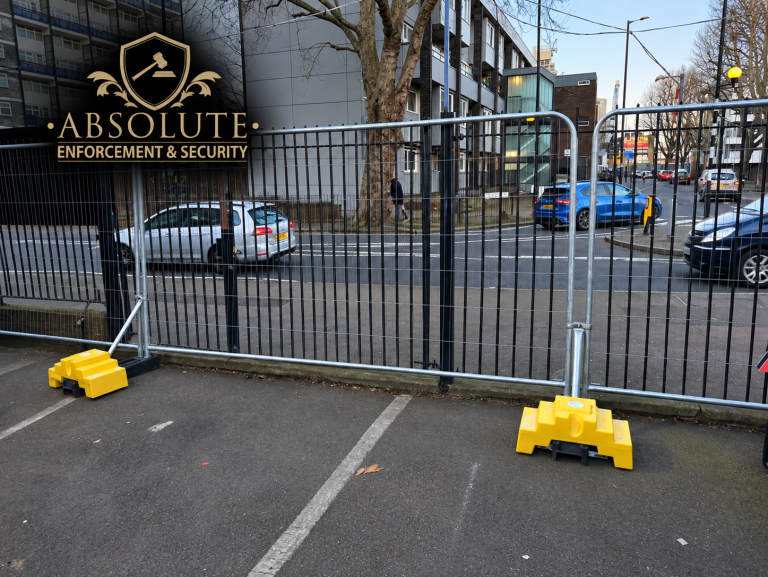
- physical perimeter security and concrete barriers;
- security dog units;
- controlled removal of goods;
- ongoing police liaison;
- management of threats and confrontation;
- monitoring of developing protest activity;
- an organised protest involving approximately 30–40 people; and
- continuous dynamic risk assessment allowing resources to be reduced safely as the threat diminished.
Most importantly, Absolute Enforcement successfully recovered possession, maintained control of the site and enabled the landlord to move forward with the property.
The previous attempt had demonstrated that gaining entry alone was not enough.
Operation Stronghold was planned around a different objective:
Take control. Secure the site. Hold the site.
Need Help With a Complex Commercial Forfeiture?
Most commercial forfeitures do not require an operation on this scale.
However, where there is a history of resistance, multiple commercial units, significant security concerns, numerous occupants or a realistic risk of third-party interference, planning and appropriate resourcing can make the difference between simply gaining entry and successfully maintaining possession.
Absolute Enforcement can assess the operational circumstances before instruction and, where required, coordinate enforcement agents, locksmiths, security personnel, dog units and other specialist resources.
If you believe your forfeiture may require an operational approach, speak to our team before instructing so that the risks and resources can be properly considered.
Missed the Start of Operation Stronghold?
Read the earlier parts of this case study to see how Operation Stronghold was planned, how the site was initially secured, and how the operation developed


